<p class="wp-block-paragraph">Christmas has come and gone – even the beat of the Twelve Drummers Drumming on the 12<sup>th</sup> day of Christmas (January 6<sup>th</sup>) According to the legend, that is the day the Three Kings arrived at the place of the nativity. What minimal attention that event receives in modern America has been further overshadowed by it being the same day of the official certification of our presidential elections – an event to which we rarely paid any attention until the Capitol Hill riots of January 6, 2021. </p>


<p class="wp-block-paragraph">The more serious question Is whether Christmas is succumbing to the political correctness and left-wing theology? It is beyond refutation that Christmas is no longer celebrated in the full meaning of the holiday outside the tabernacles of Christian churches and schools.</p>


<p class="wp-block-paragraph">The suppression of Christmas has been happening ever since the Supreme Court (mis)interpreted a letter from Thomas Jefferson to the Danbury Baptist Association in 1802. ; Jefferson argued for the separation of Church and State. ; For 145 years, it was generally believed that Jefferson was referring to a prohibition against ESTABLISHING a state religion – as was the case in England with King George serving as both monarch and head of the Anglican Church. ; It was NOT about the banishing all religious expression and events from the commons.</p>


<p class="wp-block-paragraph">The Constitution – to which Jefferson contributed and signed on to – does not make any mention of barring religion from government property or government events. ; In fact, the First Amendment guarantees the free express of all religions.</p>


<p class="wp-block-paragraph">For generations, Christmas – the real Christmas – was celebrated in every corner of America. ; The Creche was ubiquitous. ; Streets were festooned with decorations and iconic religious symbols.  ;Radio, television and public address systems carried the traditional religious carols of the season. ;</p>


<p class="wp-block-paragraph">It was not celebrated to the exclusion of other religions. All religions were welcomed in public places and had their holy days of celebration. Public school children prayed. Civic events were often opened and closed with prayers by clergy of different denominations. (When I planned civic events, I would generally engage a Christian clergy and a Jewish Rabbi for invocations and benedictions.) Retail establishment windows displayed symbols of Christmas – the Nativity, cross, angels, stars – and of other religions, such as the Menorah.</p>


<p class="wp-block-paragraph">Perhaps Christmas had one advantage in the scope of the celebration. It was both a religious AND a national holiday – having been declared by Congress in 1870, along with Independence Day, New Year&#8217;s Day and Thanksgiving. Making Christmas a national holiday posed no threat to religious expression of every type. Also, Christianity was by far the most popular religion among the American people at the time – and still is. More than 60 percent of Americans identify as Christian.</p>


<p class="wp-block-paragraph">Things changed in 1947 when the Supreme Court decided that the government could neither promote NOR INHIBIT the free expression of religion. In its decision, the High Court used the term “a wall of separation.” Later courts interpreted that to mean that all religious imagery and expression must be banned from all public events and places – contrary to the specific First Amendment protection against banning religious expression.</p>


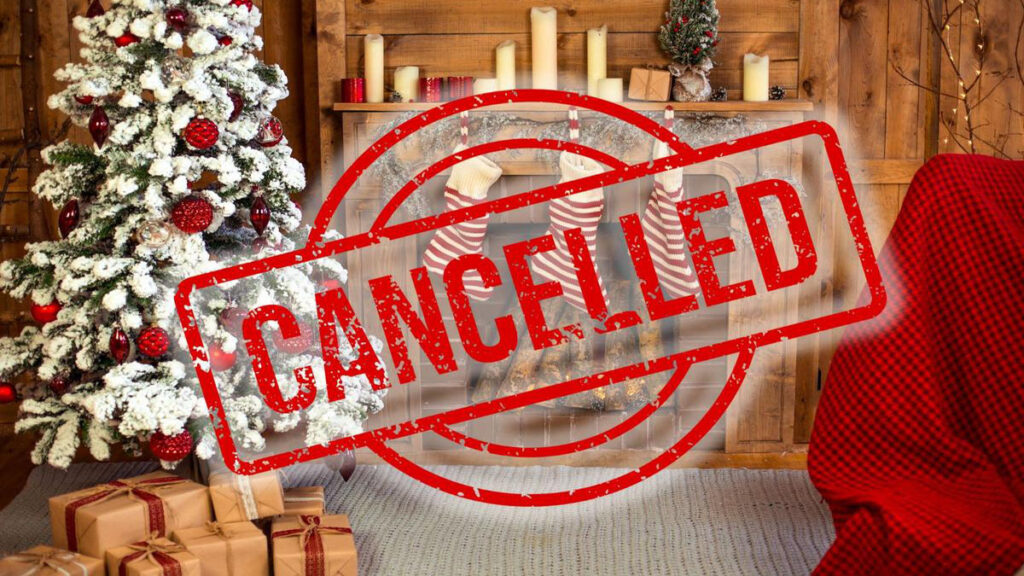
<p class="wp-block-paragraph">Over the years, Christmas has been driven from the commons. Government institutions ban even individual expressions of religion. The cancellation of Christmas spread to academia and commerce. While the holiday season was maintained, the symbols, songs, images and language of Christmas were banned. No more nativity scenes. No more crosses. No more angels. The Saint Nicholas of history and tradition disappeared in favor of a secular Santa Clause. (Just as Saint Valentine&#8217;s Day was shortened to Valentine&#8217;s Day.) The winter seasonal greeting was changed from Merry Christmas to Happy Holidays. The Christmas tree was renamed the holiday tree. Even that was mocked with the introduction of the Festivus Poll. The season of love for all was transformed into a secular celebration of materialism and greed.</p>


<p class="wp-block-paragraph">The secularization of Christmas even influenced Christian churches. The Church of England has advised against “problematic” wording in some Christmas carols. Priests have been advised to drop the term “true Messiah” as offensive to Jews. And the most religious carols have been dropped from many Christmas church programs.</p>


<p class="wp-block-paragraph">(I had that experience when attending a very liberal Catholic Church for my son’s Christmas show. ; Many of the traditional songs were dropped from the program to make room for non-Christian African music, Kwanza and Jewish holiday songs. ; The angry pushback from the congregation demonstrated how far removed left-wing elitist theology had drifted from the people in the pews.)</p>


<p class="wp-block-paragraph">I will close on a personal note. ; Several years ago, I was in Harbin, China during the Christmas season. I was surprised to see Christmas symbols – including religious images &#8212; in stores and in public places. ; In one instance, I was in a park where the public address system was playing Oh, Holy Night. ; I got emotional listening to a traditional Christian hymn being played in the public square of a Communist atheist nation – something that is illegal in my own country. ;</p>


<p class="wp-block-paragraph">Personally, I believe it is better that &#8212; as a free society – we openly and joyfully share our religious beliefs – and that the public commons is the ideal place to share. ; Not to ban and censor.</p>


<p class="wp-block-paragraph">So, there ‘tis.</p>

An after thought about the cancelling of Christmas