













A tale of two pities

The deaths of George Floyd and Charlie Kirk, though separated by five years and vastly different circumstances, have each become defining moments in America’s cultural and political landscape. Both men died unjustly—Floyd at the hands of a police officer in 2020 and Kirk in a targeted political assassination in 2025. Yet the public response to each has been strikingly different, revealing not only the deep ideological divides in the country but also the selective nature of national mourning.
Two Lives and Legacies
Beyond being murder victims, there was virtually no commonality between Floyd and Kirk. George Floyd was a man with a troubled past. His criminal record included multiple arrests for theft, drug possession, and armed robbery. While his death was undeniably tragic and unjust, Floyd’s life was marked by anti-social behavior and repeated run-ins with the law. He was not a public servant, nor a civic leader. His reputation and legacy, prior to his death, was largely negative and unknown outside of Minneapolis law enforcement.
Charlie Kirk, on the other hand, was a man of strong principles and moral conviction. As the founder of Turning Point USA, he dedicated his life to promoting conservative values, free speech, and civic engagement among young Americans. Whether one agreed with his politics or not, Kirk’s contributions to national discourse were huge, tangible and lasting. He built institutions, mentored students, and stood firm in his beliefs—even when they were unpopular. Kirk was also a family man. In a previous commentary, I referred to him credibly as “an ideal American”. Kirk’s reputation was not earned as much from what he believed in, but in how he expressed it.
To objectively compare the two is not to diminish the tragedy of Floyd’s death, but to acknowledge the stark contrast in the lives they led and the legacies they left behind. Kirk’s legacy is huge and defined based on accomplishment and personal integrity. In terms of social contribution, Floyd’s legacy lies solely in the fact that he was murdered.
Public Reaction
In the aftermath of Floyd’s death, the nation erupted. Protests swept across cities, some peaceful, others violent. Businesses were looted, police stations burned, and entire neighborhoods destabilized. The left mobilized with fervor, elevating Floyd to the status of a cultural icon. His name was etched into legislation, his image painted on murals, and the site of his death transformed into a permanent shrine. Streets were renamed, statues erected, and Floyd became a symbol of racial reckoning.
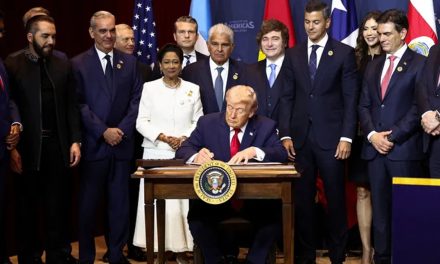
Charlie Kirk’s death, by contrast, was met with solemn mourning—especially among conservatives and those who value civil discourse. There were no riots, no looting, no calls to “burn it all down.” Instead, there were candlelight vigils, heartfelt tributes, and quiet reflection. President Donald Trump called Kirk a “hero of the republic,” and many described him as a martyr for free speech and ideological integrity. Unfortunately, in today’s civic climate heroism is often defined less by character or contribution, but more by partisan narratives.
Politics of Empathy
The divergent responses to Floyd and Kirk’s deaths expose a troubling trend: the politicization of empathy. Floyd, despite his criminal history, was embraced as a symbol of systemic injustice. Kirk, despite his civic contributions, has been vilified by some simply for his beliefs. This selective compassion undermines the very principles of justice and equality that many claim to champion.
It also raises uncomfortable questions. Why did Floyd’s death spark global protests, while Kirk’s assassination has been met with relative silence outside conservative circles? Why is one man immortalized in public art and policy, while the other is quietly buried with dignity but little fanfare?
Some argue that Floyd’s death represented a broader pattern of police brutality, while Kirk’s was an isolated act of violence. But both were victims of unjust killings. Both deserve to be remembered. And both deaths should prompt national reflection—not just on the circumstances of their demise, but on the values we choose to elevate.
The Right-Wing Way: Mourning Without Mayhem
One of the most striking differences between the two deaths is the nature of the public response. Floyd’s death led to widespread unrest, with billions in property damage and dozens of lives lost in the chaos. Kirk’s death, though equally shocking, did not provoke violence. Conservatives mourned with restraint, honoring Kirk’s legacy without destroying communities.
This speaks volumes about the ethos of each movement. One side seeks justice through upheaval and violence. The other through remembrance and dedication. One builds shrines amid shattered glass. The other lights candles in quiet resolve.
Summary
Both George Floyd and Charlie Kirk were human beings whose lives ended too soon. Neither deserved to die the way they did. But the way society has responded to their deaths reveals a deeper truth about our national conscience and our political division.
Floyd was a victim—of a brutal act that rightly sparked outrage. His murderers are in jail. Kirk was a hero—of principle, of conviction, and of courage. His murderer is also in jail. The r unresolved issue is how Kirk will be remembered and memorialized by the greater society over future years. How many statues will be erected? How many colleges where he spoke will create memorials? How many schools, streets and parks will be renamed? How many murals will appear on walls and pavements?
So, there ‘tis.



Floyd OD’ed on fentanyl while being restrained. He wasn’t murdered.
Floyd wasnt murdered, He OD’d from all of the drugs he swallowed so the cops would find it on him. The democrats held him up as a martyr to still up social unrest to push their political agenda.
George Floyd was a dead man walking before anyone called 911 when he tried to pass a counterfeit 50. Autopsy showed he had voluntarily ingested enough fentanyl to kill four people. He was arrested and restrained. He fought off four cops when they tried to put him in the squad car. He was being restrained using a legal technique and expired when the fentanyl kicked in to suppress his breathing. He was not “murdered” by a cop; he committed suicide. Regardless of the outcome of the show trial in the kangaroo court in Minneapolis, Floyd was not murdered…
Floyd was on drugs, there’s a revelation about a drug addict you can believe. While a cause of his death, all experts conclude his death was a homicide; both State autopsy reports, gents. They believed it in the first court case, they believed it in the appeal. The MN Scotus believed it. The US SCOTUS wouldn’t even hear the appeal.
Then, Tucker Carlson said it was drugs, MT Greene said it was drugs, and you guys decide to believe a bow tie and blonde bimbo instead of the experts. Brilliant! Sorry, been debunked as failing fact checks a million times. FYI: the supposed counterfeit bill was a $20, not a $50. In MN, that’s a gross misdemeanor with a potential of $3,000 and one year for first offense. He could have gotten a ticket to appear.
Chauvin had 18 complaints on file, two ended in disciplinary actions.
FYI: fentanyl overdose puts you to sleep. Did Floyd look sleepy? “I can’t breathe” sound like an overdose?
You have no proof that Floyd took drugs as the cops approached or just before he became a victim of political violence at the hands of the State. The cop took a knee, unfortunately on Floyd’s neck and that killed Floyd, dead. The autopsy just indicted he had drugs in his system which is not unusual for a drug user. Fentanyl takes 72 hours of more to be untestable.
Two autopsies by the State concluded it was a homicide. HOMICIDE Other experts, under risk of perjury, concluded it was from the choking. The jury, seeing the evidence, found the cop guilty. The cop pled guilty to the Federal Charge of denying Floyd his civil rights. The MN SCOTUS affirmed the decision during the appeal. The US SCOUTS declined to hear the appeal brought to them. It’s over, Rover, Chavin is guilty, based on the facts, reviewed by a jury of his peers, or Supremes, four times. FOUR times.
The Justice Department also investigated Minneapolis police and found a pattern of racially discriminatory policing, leading to a settlement with the state.
His wife, a Hmong beauty, divorced him.
He has been stabbed in jail.
He can be paroled at age 60.
You guys are drilling a dry hole and should know better than to accept your truths from a guy in a bowtie and some blonde bitch who dresses like a whore (even though I heartily applaud her stand on freeing The Epstein Files.)
I spell my name: Danger and I am Frank, truthful, and believe America is too. You guys believe lies. Why?
FYI: any violence during The Summer of Floyd should face the full brunt of the law, in court, where the truth comes out.
And finally, remember that PBP moderators CHOOSE to print these lies. Been lies for years. Why waste our time publishing known lies? Moderation in all things, my friendly moderators and editors. It’s your business, you decide what to print and what to exclude. I say have the CHARACTER to stop the lies, especially the ones you can see from ten miles away. Like this one. My God four court cases, two other guys pled guilty on this, two autopsy reports, how many experts under penalties of perjury == what does it take for youse to spot a lie? And on what appears to be YOUR side: Tucker, known liar, and Greene — not sure what this is. It’s not just you, I think American media in general can do better to stop the lies. Likewise, in America, the people used to judge character and shun the liars who fail to have character. Let’s bring that back.