
















Supreme Court to Decide if Independent Agencies are … Independent
The Supreme Court is now reconsidering the 1935 case Humphrey’s Executor v. United States, which limited presidential power to remove heads of independent agencies. That ruling arose when President Franklin Roosevelt attempted to fire Federal Trade Commission member William Humphrey, but the Court unanimously held that Congress could insulate such officials from removal. Today, in Trump v. Slaughter, the Court is weighing whether to overturn that precedent and restore full executive authority over agency leadership.
The Historical Context
Roosevelt had dismissed William Humphrey for opposing his New Deal policies. The Court ruled that the FTC was a “quasi-legislative” and “quasi-judicial” body, and therefore Congress could restrict the President’s removal power. This decision carved out a category of “independent agencies” that were shielded from direct presidential control.
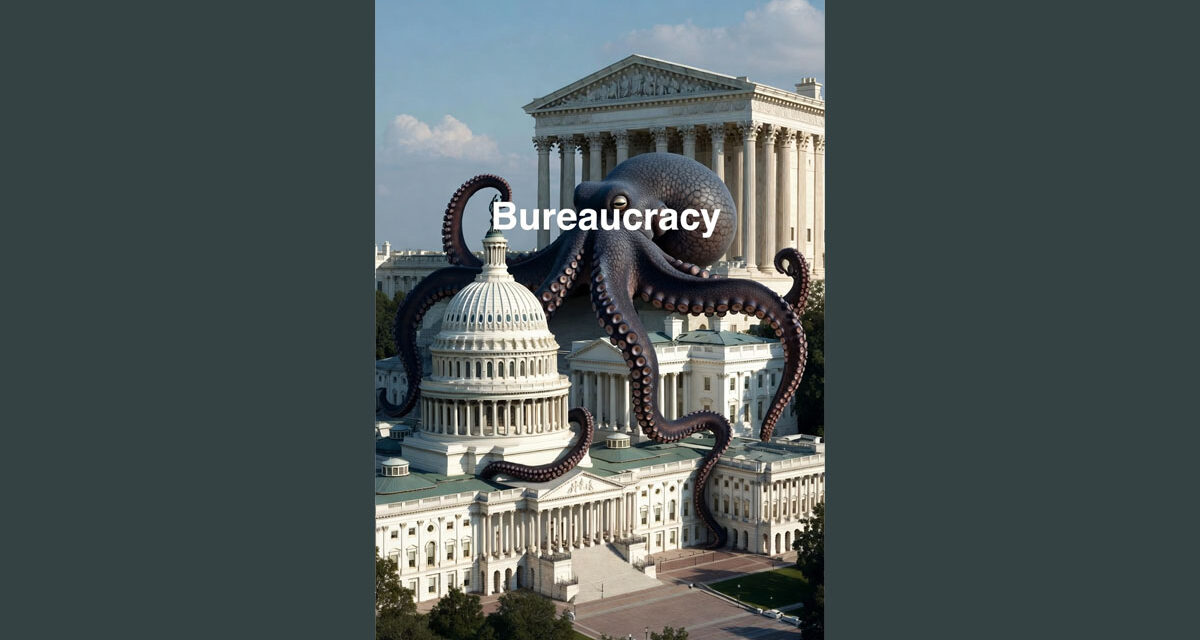
The “quasi” designation essentially created a fourth branch of government – the bureaucratic branch. It was a further slide down the slippery slope of bureaucratic tyranny launched with civil service protection for bureaucrats. It created a system in which bureaucrats — and their policies and regulations — are insulated from the authority of elected officials – and consequently from us voters.
The Humphrey’s Executor case stands in contrast to Myers v. United States (1926), where the Court had recognized broad presidential removal power over executive officers. The Humphrey’s Executor ruling narrowed that authority, creating a constitutional anomaly – a President who could appoint officials but not freely remove them.
The Andrew Johnson episode illustrates the absurdity of limiting removal power. Johnson was impeached in 1868 for violating the Tenure of Office Act when he attempted to remove Secretary of War Edwin Stanton. Congress had tried to prevent Johnson from firing Cabinet members without Senate approval. The impeachment failed, and the Act was later repealed, once again affirming the constitutional power of the President to remove certain federal officials.
Why Humphrey’s Executor Should Be Overturned
There are many reasons why the 1935 ruling should be overturned.
- Violation of Separation of Powers. The Constitution establishes three co-equal branches. By creating “independent” executive agencies insulated from presidential control, Congress effectively transfers executive power to itself. This undermines the separation of powers and distorts the checks and balances system.
- Creation of an unconstitutional Bureaucratic Branch independent agencies has resulted in a de facto fourth branch of government. They wield legislative, executive, and judicial powers simultaneously, yet are accountable to neither the President nor the electorate. This bureaucratic branch is unconstitutional and corrosive to democratic governance.
- Illogical Appointment Without Removal It is irrational to allow the President to appoint officials but deny him the authority to remove them. The 1800s Johnson impeachment saga demonstrated that Congress cannot tie the President’s hands in managing the executive branch. The Court eventually recognized that removal power is essential to executive accountability.
- Accountability to the People. The only way citizens influence government is through elections. If elected Presidents cannot remove entrenched bureaucrats, then the people lose control over policy direction. Independent agencies become dominated by unelected elites who are insulated from public scrutiny and accountability.
- Danger of Authoritarian Bureaucracy History shows that authoritarian regimes thrive when permanent bureaucracies assume power. Over the past century, the United States has drifted toward bureaucratic dominance, with agencies multiplying and expanding authority. If unchecked, this bureaucratic branch could eclipse the elected branches entirely. That is the road to authoritarianism.
The Current Case
The Supreme Court is now considering Trump v. Slaughter, which directly challenges Humphrey’s Executor. Trump sought to remove Federal Trade Commission member Rebecca Slaughter based on policy differences. The case asks whether presidents should have at-will removal power over independent agency heads.
The Court’s conservative majority has signaled skepticism of Humphrey’s Executor. If overturned, presidents would regain full authority to manage the executive branch, including agencies like the FTC, SEC, and NLRB. This would restore accountability and constitutional balance. And once again, elections can have consequences.
The Supreme Court now has an opportunity to correct a constitutional mistake that has distorted American governance for nearly a century. By overturning Humphrey’s Executor, the Court would reaffirm the President’s authority to manage the executive branch, restore accountability to the people and meaning to elections. It would restore the bureaucracy as subservient to the three constitutional branches of the federal government. The stakes are immense. The future of American democracy depends on ensuring that the leaders we elect hold the reins of power – and not a permanent elitist and unaccountable bureaucracy.
So, there ‘tis.



If we don’t have independent agencies, where needed, then we have partisan agencies for everything.
It seems that simple.
If it happens, day one, Trump does with our money supply what he’s doing with our economy via tariffs, or worse. He has already stated his intent to re-write our loans as if for his hotels. That’s the end of money as we know it. The sovereign state is not Trump Hotel. Day two, he raids Social Security piggy bank.
This is truly the end of the world as we know it. When money is worth nothing, really, really bad ju ju.